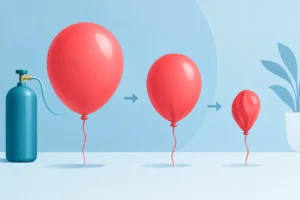
A balloon arch can look perfectly plump at setup, then seem a little less festive by the time guests arrive. So, why do helium balloons shrink? Usually, they are not truly shrinking at all. Helium is gradually escaping through the balloon material, and changes in temperature can make the effect look much more dramatic.
The good news is that a softer-looking balloon does not automatically mean your celebration decor has failed. With the right balloon type, timing, filling method, and placement, you can help bouquets, ceiling balloons, and statement displays stay beautiful through the moments that matter most.
Why Do Helium Balloons Shrink?
Helium is a very small, light gas. Its tiny atoms can slowly pass through the microscopic spaces in a balloon’s material, especially natural latex. As helium leaves, the balloon holds less gas and loses some of its firm, rounded shape. This process is called diffusion, and it happens even with premium balloons.
Latex balloons are porous because they are made from natural rubber. They are wonderful for colorful, organic-looking party designs, but they typically have a shorter float time than foil balloons. A standard helium-filled latex balloon may look its best for roughly 8 to 12 hours, though the result depends on balloon quality, room conditions, and how it was inflated. Larger latex balloons usually last longer because they contain more helium.
Foil balloons, also called Mylar balloons, have a less porous surface. They can often stay afloat for several days or even weeks when sealed properly. They still lose helium over time, usually through seams, valves, or tiny punctures, but the change tends to be slower. That is why foil number balloons, letter balloons, and character balloons are popular when you need decor prepared ahead of an event.
Cold Air Can Make a Balloon Look Deflated
Temperature is the other major reason a helium balloon suddenly appears to shrink. Helium expands in warmth and contracts in cold. If you carry a full balloon from a warm room into chilly outdoor air, the gas inside takes up less space. The balloon may look wrinkled, soft, or partly deflated even though much of the helium is still there.
Bring that same balloon back indoors, and it may round out again as the gas warms. This is especially common at winter parties, air-conditioned venues, and events where balloons travel in a cold car before setup.
Heat brings the opposite risk. A balloon left in direct sunlight or a hot vehicle can expand too much and burst. For the best finish, keep helium balloons in a shaded, temperature-stable space and transport them carefully. The goal is not to keep them hot or cold, but comfortably moderate.
The Balloon Material Makes a Big Difference
Choosing between latex and foil should start with your event plan, not just your color palette. Latex gives a soft, joyful look and works beautifully in balloon bouquets, ceiling clusters, garlands, and sculptural installations. It is ideal for events where decor will be installed close to the celebration time.
Foil balloons offer a crisp shape, reflective finish, and longer float life. They are an excellent choice for birthday numbers, graduation messages, baby shower themes, and gifts that may be delivered a day or two before the occasion. Their trade-off is that they do not create the same organic movement as latex, and their shapes can crease if underfilled or handled roughly.
Balloon size matters, too. A small 5-inch latex balloon is generally not meant to float with helium for long. Larger balloons have a better chance of staying buoyant because the helium has more lifting power relative to the balloon’s weight. Accessories count as well: heavy ribbons, oversized tassels, and decorative attachments can shorten the time a balloon remains afloat.
How to Help Helium Balloons Last Longer
If your party runs for a few hours, thoughtful preparation can make a visible difference. Inflate latex balloons as near to event time as practical, particularly for morning or evening celebrations. If the display must be prepared earlier, choose a professional balloon treatment designed to coat the inside of latex balloons and slow helium loss. It can extend float time significantly, but it is not magic: weather, balloon size, and handling still affect the final result.
Use fresh, high-quality balloons and inflate them to the recommended size. Underinflated balloons may look limp from the start, while overinflation puts extra stress on latex and seams. A properly filled balloon should look smooth and round, not pear-shaped or stretched thin.
Keep finished decor away from direct sun, sharp corners, rough walls, ceiling fans, and food-prep heat. Outdoor setups need extra planning because wind, heat, humidity, and cold can all change how balloons behave. For an outdoor event, a balloon stand, weighted arrangement, or air-filled installation may be more dependable than a large floating display.
A few practical habits can protect the polished look you paid for:
- Keep balloons indoors or in shade until setup time.
- Avoid leaving them in a car, especially overnight or in direct sun.
- Use balloon weights that are secure but not unnecessarily heavy.
- Transport bouquets upright in a roomy vehicle so they do not rub against surfaces.
- Keep spare balloons available for high-impact displays or outdoor celebrations.
When a Balloon Is Actually Leaking
Not every soft balloon is simply reacting to the cold. If a foil balloon looks noticeably deflated indoors after only a short time, it may have a faulty valve, a weak seam, or a pinhole. Check whether it has been pressed against a sharp decorative item, a textured wall, or a pointed ribbon end.
Latex balloons can also develop tiny leaks from overinflation or damage during transport. A balloon that suddenly loses most of its shape is more likely to have a puncture than normal helium diffusion. In that case, replacing it is usually more effective than trying to refill it repeatedly.
For foil balloons, a small top-up of helium can restore their shape if there is no leak. Do not overfill them. Stop when the balloon is firm and smooth, since excessive pressure may split a seam. Latex balloons are less forgiving once they have softened, so planning a few extras is often the simplest way to preserve a picture-ready display.
Planning Decor Around Float Time
The smartest balloon styling works with the material rather than asking it to do more than it can. For a two-hour birthday lunch, helium-filled latex bouquets can create a light, celebratory atmosphere with ease. For a weekend-long celebration or a photo backdrop assembled the night before, foil accents and air-filled balloon designs are often the better choice.
Air-filled decor deserves more attention than it gets. Balloon garlands, columns, flower bouquets, and stands can look just as joyful without relying on helium at all. They also tend to be more stable in unpredictable weather and can last far longer than floating balloons. Helium is best reserved for the details that benefit from lift: a surprise bouquet, floating ceiling moment, number balloon, or elegant gift arrangement.
At Miss Balloon Decorations, thoughtful material choices and careful finishing help turn balloon ideas into celebration-ready displays. Whether you are planning a birthday, wedding, graduation, or grand opening, share your event timing and venue conditions when ordering. Those details help shape decor that looks its happiest when your guests are there to enjoy it.
A balloon that softens over time is simply doing what helium balloons do. Plan the display around its natural float time, protect it from temperature extremes, and let the freshest, fullest balloons take center stage when the celebration begins.